When you were a child, you probably had many questions about nature that you asked your mom, dad, teachers, or anyone who would listen. Why is the sky blue? How hot is the sun? You might even wonder about man-made products like airplanes. At one time or another, you probably asked someone, “How do airplanes fly?” or even‘“How do airplanes work?”
Airplanes work based on aerodynamics principles, which involve air movement around the aircraft to create lift, thrust, drag, and weight. The wings are designed to generate lift with a curved upper surface and a flatter lower surface. This causes air to move faster over the top than underneath, creating a pressure difference that lifts the plane. The engines provide thrust, propelling the plane forward, while the tail and control surfaces help stabilize and maneuver the aircraft.
To learn more about airplane parts, how they work, and how they fly, continue reading below to find out from the aircraft dispatcher specialists at Sheffield School of Aeronautics.
How High Do Airplanes Fly?
You might wonder how high do airplanes go? Commercial airplanes typically fly between 30,000 and 40,000 feet, known as the cruising altitude. This altitude range offers an optimal balance between fuel efficiency and engine performance. At these heights, the air is thinner, which reduces drag and allows the aircraft to travel faster and more efficiently. Flying at high altitudes also helps avoid weather disturbances and turbulence, which are more common at lower levels.
What Are the 5 Basic Parts of an Airplane?
The main parts of an airplane include the fuselage, wings, empennage, landing gear, and engines. Each part has specifi
c components:
- Fuselage: The main body housing the cockpit, passengers, and cargo.
- Wings: Generate lift to support the airplane in flight.
- Empennage: The tail section includes horizontal and vertical stabilizers for stability and control.
- Landing Gear: Supports the aircraft during takeoff, landing, and taxiing.
- Powerplant: The engine or engines that provide thrust.
Fuselage
The fuselage, the main body of an airplane, serves as the central structure to which all other components are attached. It houses the cockpit, where pilots control the aircraft and the cabin, accommodating passengers and cargo. Structurally, the fuselage is designed to withstand various aerodynamic forces and stresses during
flight. It provides a streamlined shape to minimize drag and ensure efficient flight dynamics.
Wings
Before you can answer, “How do the wings of an airplane work?” you need to know about the parts of an airplane wing. These parts include:
- Spars: The main structural supports running the length of the wing.
- Ribs: The cross-sectional supports give the wing its shape.
- Ailerons: Control surfaces on the trailing edge for roll control.
- Flaps: Extendable surfaces on the trailing edge to increase lift during takeoff and landing.
- Winglet: Small vertical surfaces at the tips to reduce drag.
These components work harmoniously to ensure the airplane can generate lift, be controlled by the pilot, and safely take off, fly, and land.
An airplane’s wings generate lift by creating a pressure difference between the upper and lower surfaces. The curved upper surface causes air to move faster, reducing pressure above the wing, while the flatter lower surface increases pressure below, lifting the plane.
Empennage
The tail, or empennage, comprises the horizontal stabilizer, vertical stabilizer, rudder, and elevator. This aircraft section is crucial for maintaining stability and control during flight. The horizontal stabilizer prevents unwanted pitch movements, while the vertical stabilizer keeps the aircraft from yawing side to side. The rudder a
nd elevator are movable control surfaces that pilots use to adjust the aircraft’s direction and attitude.
Landing Gear
Landing gear supports the aircraft during takeoff, landing, and taxiing. It consists of wheels, struts, brakes, and shock absorbers. During takeoff and landing, the landing gear absorbs the impact with the runway, ensuring a smooth transition. Modern aircraft often have retractable landing gear, which can be stowed away during flight to reduce drag and improve aerodynamic efficiency. The landing gear also has brakes to help slow down the aircraft upon landing.
Engine/Powerplant
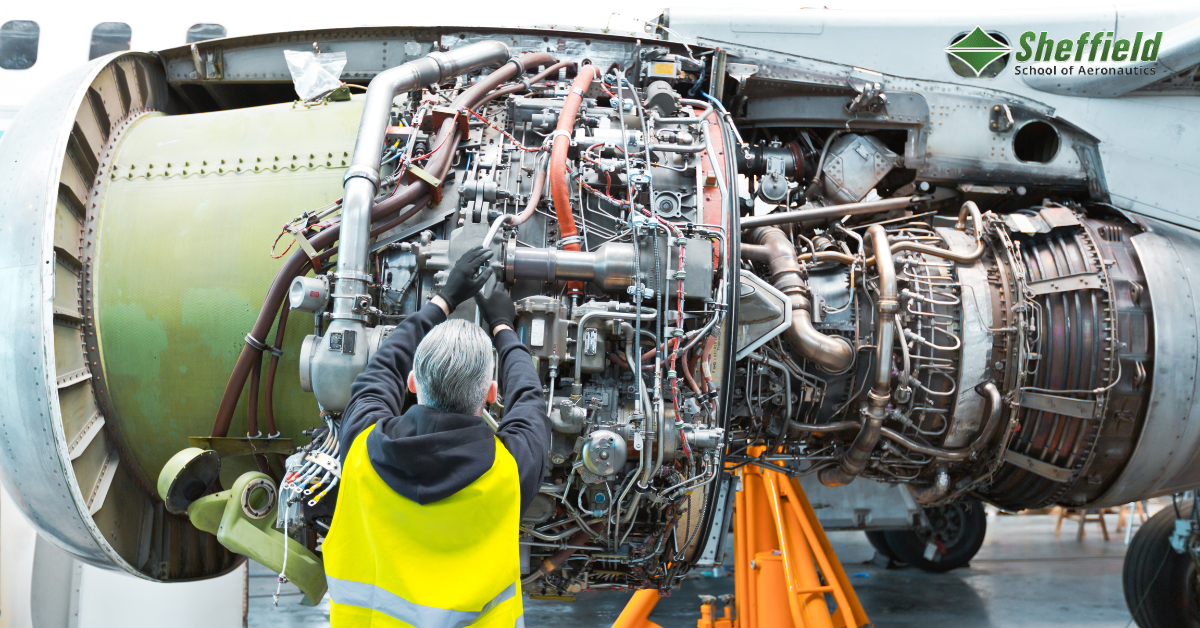
Are you wondering, “How do airplane engines work?” Airplane engines, particularly jet engines, operate on the principle of jet propulsion. It converts fuel into mechanical energy to generate thrust, propelling the aircraft forward. Air is sucked into the engine’s intake and compressed by a series of fan blades. Next, fuel is injected into the compressed air and ignited in the combustion chamber, producing a high-pressure, high-velocity stream of exhaust gasses. These gasses are expelled out of the back of the engine, generating thru
st that propels the airplane forward. The efficiency and power of jet engines make them suitable for the high-speed, long-distance travel that modern aviation requires.
How Do Airplane Propellers Work?
Unlike jet engines, propeller engines use a rotating propeller to create thrust by moving air backward. Airplane propellers convert rotational power into thrust. The propeller’s blades are shaped like airfoils, creating a pressure difference as they spin, pulling the airplane forward through the air. The engine powers the propeller’s rotation, while the angle of the blades (pitch) can be adjusted to optimize performance.
Now That You Know How Airplanes Work Let Sheffield Work for You
So, are you interested in starting an aviation career? If yes, you will likely have much to learn. Now that you can answer, “How do airplanes work?” you are already on your way.
At Sheffield School of Aeronautics, an FAA-approved flight dispatcher school, we teach our students more than how to become an aircraft dispatcher. For information regarding what we know, read our blogs and learn about Air Traffic Controller Qualifications, ADX Test Prep, and other topics related to dispatching or flying.
If you want to learn more about our school, read our About Sheffield page. Then, once you are ready to register at our flight dispatcher school, contact us online today. You can also call us toll-free at 800-843-8289. Let your dispatcher career soar at Sheffield School of Aeronautics.


How Do Airplanes Work?
When you were a child, you probably had many questions about nature that you asked your mom, dad, teachers, or anyone who would listen. Why is the sky blue? How hot is the sun? You might even wonder about man-made products like airplanes. At one time or another, you probably asked someone, “How do airplanes fly?” or even‘“How do airplanes work?”
Airplanes work based on aerodynamics principles, which involve air movement around the aircraft to create lift, thrust, drag, and weight. The wings are designed to generate lift with a curved upper surface and a flatter lower surface. This causes air to move faster over the top than underneath, creating a pressure difference that lifts the plane. The engines provide thrust, propelling the plane forward, while the tail and control surfaces help stabilize and maneuver the aircraft.
To learn more about airplane parts, how they work, and how they fly, continue reading below to find out from the aircraft dispatcher specialists at Sheffield School of Aeronautics.
How High Do Airplanes Fly?
You might wonder how high do airplanes go? Commercial airplanes typically fly between 30,000 and 40,000 feet, known as the cruising altitude. This altitude range offers an optimal balance between fuel efficiency and engine performance. At these heights, the air is thinner, which reduces drag and allows the aircraft to travel faster and more efficiently. Flying at high altitudes also helps avoid weather disturbances and turbulence, which are more common at lower levels.
What Are the 5 Basic Parts of an Airplane?
The main parts of an airplane include the fuselage, wings, empennage, landing gear, and engines. Each part has specifi
c components:
Fuselage
The fuselage, the main body of an airplane, serves as the central structure to which all other components are attached. It houses the cockpit, where pilots control the aircraft and the cabin, accommodating passengers and cargo. Structurally, the fuselage is designed to withstand various aerodynamic forces and stresses during
flight. It provides a streamlined shape to minimize drag and ensure efficient flight dynamics.
Wings
Before you can answer, “How do the wings of an airplane work?” you need to know about the parts of an airplane wing. These parts include:
These components work harmoniously to ensure the airplane can generate lift, be controlled by the pilot, and safely take off, fly, and land.
An airplane’s wings generate lift by creating a pressure difference between the upper and lower surfaces. The curved upper surface causes air to move faster, reducing pressure above the wing, while the flatter lower surface increases pressure below, lifting the plane.
Empennage
The tail, or empennage, comprises the horizontal stabilizer, vertical stabilizer, rudder, and elevator. This aircraft section is crucial for maintaining stability and control during flight. The horizontal stabilizer prevents unwanted pitch movements, while the vertical stabilizer keeps the aircraft from yawing side to side. The rudder a
nd elevator are movable control surfaces that pilots use to adjust the aircraft’s direction and attitude.
Landing Gear
Landing gear supports the aircraft during takeoff, landing, and taxiing. It consists of wheels, struts, brakes, and shock absorbers. During takeoff and landing, the landing gear absorbs the impact with the runway, ensuring a smooth transition. Modern aircraft often have retractable landing gear, which can be stowed away during flight to reduce drag and improve aerodynamic efficiency. The landing gear also has brakes to help slow down the aircraft upon landing.
Engine/Powerplant
Are you wondering, “How do airplane engines work?” Airplane engines, particularly jet engines, operate on the principle of jet propulsion. It converts fuel into mechanical energy to generate thrust, propelling the aircraft forward. Air is sucked into the engine’s intake and compressed by a series of fan blades. Next, fuel is injected into the compressed air and ignited in the combustion chamber, producing a high-pressure, high-velocity stream of exhaust gasses. These gasses are expelled out of the back of the engine, generating thru
st that propels the airplane forward. The efficiency and power of jet engines make them suitable for the high-speed, long-distance travel that modern aviation requires.
How Do Airplane Propellers Work?
Unlike jet engines, propeller engines use a rotating propeller to create thrust by moving air backward. Airplane propellers convert rotational power into thrust. The propeller’s blades are shaped like airfoils, creating a pressure difference as they spin, pulling the airplane forward through the air. The engine powers the propeller’s rotation, while the angle of the blades (pitch) can be adjusted to optimize performance.
Now That You Know How Airplanes Work Let Sheffield Work for You
So, are you interested in starting an aviation career? If yes, you will likely have much to learn. Now that you can answer, “How do airplanes work?” you are already on your way.
At Sheffield School of Aeronautics, an FAA-approved flight dispatcher school, we teach our students more than how to become an aircraft dispatcher. For information regarding what we know, read our blogs and learn about Air Traffic Controller Qualifications, ADX Test Prep, and other topics related to dispatching or flying.
If you want to learn more about our school, read our About Sheffield page. Then, once you are ready to register at our flight dispatcher school, contact us online today. You can also call us toll-free at 800-843-8289. Let your dispatcher career soar at Sheffield School of Aeronautics.