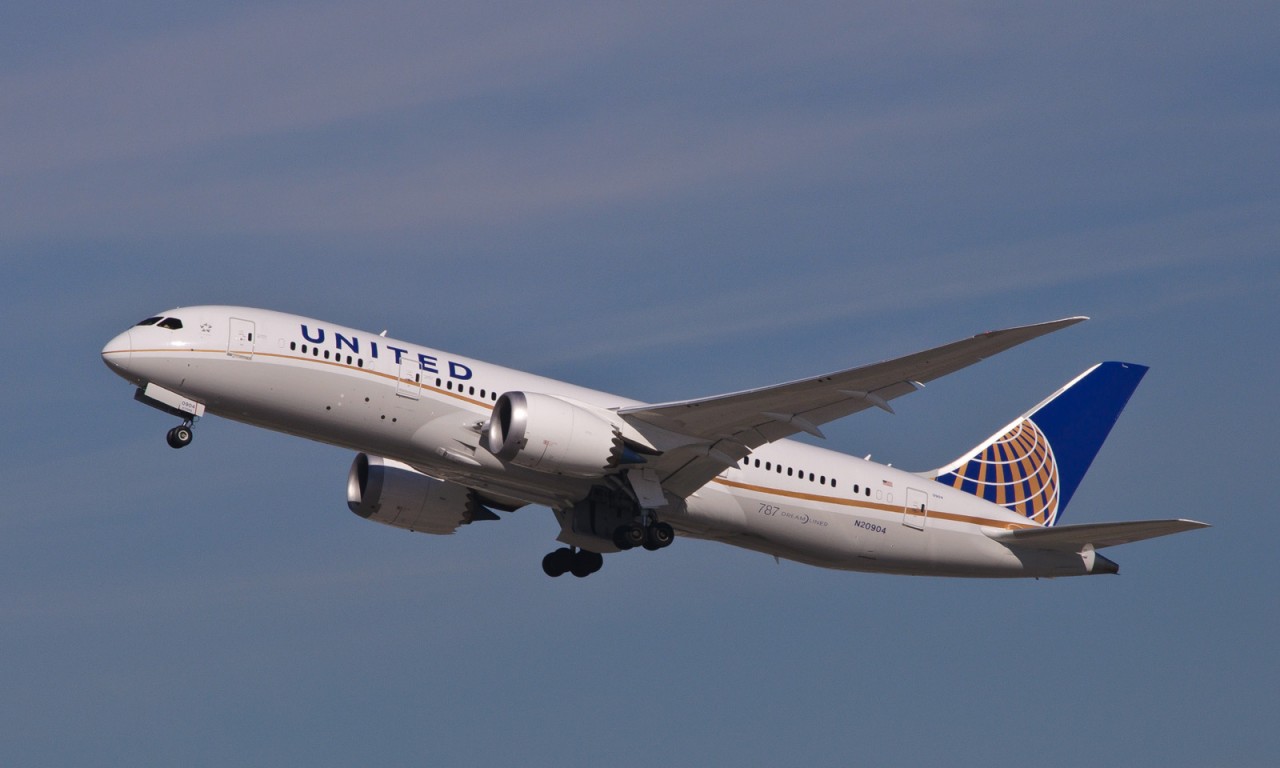
Investment analysts at United Airlines are paid to worry about the company’s budget, especially if the current rumor of an economic downturn happens sooner than expected. However, after the company’s quarterly earnings call on Wednesday, the higher-ups have come up with a simple strategy to cut down on costs. Executives have confirmed that United Airlines is planning to fly larger jets to lower costs over the next six years. Also known as “increasing gauge,” the strategy will call for larger aircraft to seat more passengers per flight.
“We have large hubs in big cities across the country, and because of that, we should be the airline with the highest gauge,” United President Scott Kirby told analysts. “But at this point, we’re not. In fact, United is seven-to-eight years behind our large competitors in gauge growth with approximately 13 percent fewer seats per domestic departure compared to Delta.” [1]
CASM
Increasing the number of seats per departure lowers unit costs since the airline industry’s “cost” isn’t an accurate gauge for spending. Alternatively, the cost per available seat mile (or CASM) is used by airlines to gauge how much money is spent to transport one seat for one mile.
By adding seats on an existing aircraft, airlines can lower this cost metric. Normally, fuel isn’t equated in this calculation, therefore, if oil prices start to peak, airlines are still able to compare quarterly costs.
“We are very proud of the cost control we’ve delivered, and will continue to deliver through next year,” Chief Financial Officer Gerry Laderman said. “We expect the three-year compound annual growth rate for non-fuel unit costs to be just 0.3%, which would be a remarkable and industry-leading achievement.” [1]
Two-Part Strategy
Almost five years have passed since CEO Oscar Munoz succeeded Jeff Smisek, but the airline’s executives are still restoring many oversights such as the current plane size problem created by the previous heads. United focused on minimizing itself for better profitability while under Smisek. This was due to investment analysts’ “capacity discipline,” which called for fewer seats in the industry to raise margins for all airlines.
Now that airlines are growing again, United is determined to execute a similar plan. Depending on the situation, a regional jet flight can swap with a larger Airbus A319, or an Airbus A319 flight can switch to a much larger A320.
Make sure to stay up to date with aviation news from our crew at Sheffield and if you’d like to learn how air traffic control systems work, contact us at 800-843-8289 to get started!
Sources:
[1] Yahoo! Finance – United Plan to Use Larger Jets to Control Rising Costs
This entry was posted in News & Regulations. Bookmark the
permalink. Both comments and trackbacks are currently closed.


United Airlines Is Planning to Fly Larger Jets to Lower Costs
Investment analysts at United Airlines are paid to worry about the company’s budget, especially if the current rumor of an economic downturn happens sooner than expected. However, after the company’s quarterly earnings call on Wednesday, the higher-ups have come up with a simple strategy to cut down on costs. Executives have confirmed that United Airlines is planning to fly larger jets to lower costs over the next six years. Also known as “increasing gauge,” the strategy will call for larger aircraft to seat more passengers per flight.
“We have large hubs in big cities across the country, and because of that, we should be the airline with the highest gauge,” United President Scott Kirby told analysts. “But at this point, we’re not. In fact, United is seven-to-eight years behind our large competitors in gauge growth with approximately 13 percent fewer seats per domestic departure compared to Delta.” [1]
CASM
Increasing the number of seats per departure lowers unit costs since the airline industry’s “cost” isn’t an accurate gauge for spending. Alternatively, the cost per available seat mile (or CASM) is used by airlines to gauge how much money is spent to transport one seat for one mile.
By adding seats on an existing aircraft, airlines can lower this cost metric. Normally, fuel isn’t equated in this calculation, therefore, if oil prices start to peak, airlines are still able to compare quarterly costs.
“We are very proud of the cost control we’ve delivered, and will continue to deliver through next year,” Chief Financial Officer Gerry Laderman said. “We expect the three-year compound annual growth rate for non-fuel unit costs to be just 0.3%, which would be a remarkable and industry-leading achievement.” [1]
Two-Part Strategy
Almost five years have passed since CEO Oscar Munoz succeeded Jeff Smisek, but the airline’s executives are still restoring many oversights such as the current plane size problem created by the previous heads. United focused on minimizing itself for better profitability while under Smisek. This was due to investment analysts’ “capacity discipline,” which called for fewer seats in the industry to raise margins for all airlines.
Now that airlines are growing again, United is determined to execute a similar plan. Depending on the situation, a regional jet flight can swap with a larger Airbus A319, or an Airbus A319 flight can switch to a much larger A320.
Make sure to stay up to date with aviation news from our crew at Sheffield and if you’d like to learn how air traffic control systems work, contact us at 800-843-8289 to get started!
Sources:
[1] Yahoo! Finance – United Plan to Use Larger Jets to Control Rising Costs