Blog #1 by R.R. (Sheffield Graduate)
Welcome to my insight into the beginnings of a career in worldwide flight planning & operations.
Having graduated from the Sheffield School with an FAA Dispatch License, and to cut a long story short, I’m about 1 month into a new operations controller role for a worldwide aviation management company based on the outskirts of London. The operations department I now work in has a real mix of people and from all different backgrounds; for me, it’s my first job back in the UK since leaving after university in 2006. As a snapshot of what we do: we manage, maintain, plan and problem-solve, and ultimately dispatch a mixed and busy fleet of private jets to destinations across the globe. It’s complex, interesting, sometimes frustrating, fun, and never boring. But for now, I’ll start a bit further back I think.
Skiing, helicopters and working visas.
I’d looked at doing the Sheffield course about 3 years previous, when I was briefly unemployed in the UK in the autumn. My parents offered to loan me the money to do it and I even received a personal response from Sheffield regarding a few queries that I had. But I wasn’t sure, and then my old boss rang and offered a cushy role out in Switzerland for the winter, which I grabbed with both hands, was on a plane 2 days later and was in the Alps for the winter.
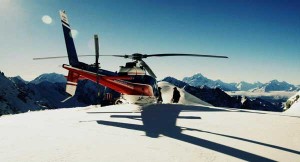
Mount Cook National Park – New Zealand
Fast forward to New Zealand 2012, and by way of an almost encyclopaedic knowledge of working holiday visa programmes available to Brits, I secured a role as ground crew for a helicopter company doing scenic flights, charter work*, and heliskiing. (As I go along I’ll try and explain my understanding of technical/industry speak that I’ve come across since moving into aviation proper – accuracy not guaranteed…!)
*charter work – covers everything under the sun basically, that is billed as using the whole aircraft rather than charging per seat say, like for a scenic flight.
I learned loads from working at the helicopter company, and was very happy. Things like load-sheets, fuel, duty hours, a bit of weather, planning, scheduling and operational control – up to 8 helicopters at once on busy days (Operational Control – a big thing for dispatchers, more on this to come, for sure). But in the end, I reached a ceiling in that that type of operation relies very heavily on the pilot, and by the nature of the work (VFR, local environment) operations-wise there came a natural limit as to how much I could contribute.

Cape Foul Wind – New Zealand
And so again I started to look at the job sites and ads for roles with a bit more going on and a greater level of responsibility. From reading a lot about the Flight Operations industry it began to appeal more and more. At that time I think I was attracted by the complexity of it, the mix of geography, logistics, foresight, communication, math, physics, weather etc.. Plus I like to know what’s going on, to have a handle on things.
But from reading more and more about it and becoming more and more set on Flight Operations as a career, it became obvious to me that I was lacking in the technical knowledge that was required for the jobs that I wanted to apply for. In short, I didn’t actually understand some of the language used in some of the job adverts or articles that interested me. What is “Part 91,” what is an “alternate,” what does it mean when they say “minimums,” why, when I’m watching the flight info channel on a long flight, does the altitude increase as the flight progresses? “Jump seat,” what!?
I just didn’t quite get it.
And so I set about looking at what options were available to me.
END. (See Part 2)
June 16, 2014 – R.R. – Sheffield Graduate


Insight Into Worldwide Flight Planning & Aircraft Dispatcher Operations
Blog #1 by R.R. (Sheffield Graduate)
Welcome to my insight into the beginnings of a career in worldwide flight planning & operations.
Having graduated from the Sheffield School with an FAA Dispatch License, and to cut a long story short, I’m about 1 month into a new operations controller role for a worldwide aviation management company based on the outskirts of London. The operations department I now work in has a real mix of people and from all different backgrounds; for me, it’s my first job back in the UK since leaving after university in 2006. As a snapshot of what we do: we manage, maintain, plan and problem-solve, and ultimately dispatch a mixed and busy fleet of private jets to destinations across the globe. It’s complex, interesting, sometimes frustrating, fun, and never boring. But for now, I’ll start a bit further back I think.
Skiing, helicopters and working visas.
I’d looked at doing the Sheffield course about 3 years previous, when I was briefly unemployed in the UK in the autumn. My parents offered to loan me the money to do it and I even received a personal response from Sheffield regarding a few queries that I had. But I wasn’t sure, and then my old boss rang and offered a cushy role out in Switzerland for the winter, which I grabbed with both hands, was on a plane 2 days later and was in the Alps for the winter.
Mount Cook National Park – New Zealand
Fast forward to New Zealand 2012, and by way of an almost encyclopaedic knowledge of working holiday visa programmes available to Brits, I secured a role as ground crew for a helicopter company doing scenic flights, charter work*, and heliskiing. (As I go along I’ll try and explain my understanding of technical/industry speak that I’ve come across since moving into aviation proper – accuracy not guaranteed…!)
*charter work – covers everything under the sun basically, that is billed as using the whole aircraft rather than charging per seat say, like for a scenic flight.
I learned loads from working at the helicopter company, and was very happy. Things like load-sheets, fuel, duty hours, a bit of weather, planning, scheduling and operational control – up to 8 helicopters at once on busy days (Operational Control – a big thing for dispatchers, more on this to come, for sure). But in the end, I reached a ceiling in that that type of operation relies very heavily on the pilot, and by the nature of the work (VFR, local environment) operations-wise there came a natural limit as to how much I could contribute.
Cape Foul Wind – New Zealand
And so again I started to look at the job sites and ads for roles with a bit more going on and a greater level of responsibility. From reading a lot about the Flight Operations industry it began to appeal more and more. At that time I think I was attracted by the complexity of it, the mix of geography, logistics, foresight, communication, math, physics, weather etc.. Plus I like to know what’s going on, to have a handle on things.
But from reading more and more about it and becoming more and more set on Flight Operations as a career, it became obvious to me that I was lacking in the technical knowledge that was required for the jobs that I wanted to apply for. In short, I didn’t actually understand some of the language used in some of the job adverts or articles that interested me. What is “Part 91,” what is an “alternate,” what does it mean when they say “minimums,” why, when I’m watching the flight info channel on a long flight, does the altitude increase as the flight progresses? “Jump seat,” what!?
I just didn’t quite get it.
And so I set about looking at what options were available to me.
END. (See Part 2)
June 16, 2014 – R.R. – Sheffield Graduate